
"green bean sorting"
300 article(s) found

Secondary processing of Ugandan Coffee
Professional coffee knowledge exchange more coffee bean information Please follow the coffee workshop (Wechat official account cafe_style) Secondary processing more than 95% of the total coffee output is exported in the form of green beans. Secondary processing, also known as export grading, converts clean coffee (FAQ) into various coffee grades that meet international standards. This process includes cleaning FAQs if the coffee is wet (M

The treatment method of raw coffee bean; the detailed introduction of washing method.
When the coffee fruit is harvested from the mountain, the next step is to remove the peel and pulp of the coffee beans. There are two main ways of treatment: washing and solarization. But the ultimate determining factor is whether there is enough water to use. Some special boutique coffees are both insolated and washed. Washing requires the use of special machinery and equipment and adequate water sources.

Kenya grades Kenyan boutique coffee beans
Kenya Cupping (Simon) 2015-08-01 16:00 usually Kenya coffee is classified as follows: 1) Common classification: coffee fruits picked by hand, picked by hand, picked out immature fruit (unripe), overripe fruit (overripe) and other defects, peeled, fermented for about 36 hours, placed on a metal grid for sun drying

[Qianjie September new beans] express delivery! Carefully selected and baked, just to show the good coffee
[preface] friends who follow us all know that we also got a lot of new beans in August! Now let's sort out and introduce these unique new beans [African beans] [Ethiopia Gemma] countries: Ethiopia producing areas: Gemma altitude: 1800 meters above sea level: local native species treatment: sun treatment Ethiopia's main

Kenya raw bean wholesale Kenya AA wholesale price Kenya grade fine coffee raw bean
Kenyan coffee has many followers in the boutique coffee industry, and Kenyan AA has an extraordinary popularity. Usually Kenyan coffee is classified as follows: 1) Common categories: coffee fruits picked by hand, picked by hand, picked out immature fruit (unripe), overripe fruit (overripe) and other defects, peeled, fermented for about 36 hours, and placed on a metal grid for a day.
Kenya Coffee Grade: Kenya AA
Kenyan coffee has many followers in the boutique coffee industry, and Kenyan AA has an extraordinary popularity. Usually, Kenyan coffee is classified as follows: 1) Common categories: coffee fruits picked by hand, picked by hand, picked out immature fruit (unripe), overripe fruit (overripe) and other defects, peeled, fermented for about 36 hours, and dried in the sun on a metal grid.
Kenyan coffee is grown in Kenyan coffee.
For more information on coffee beans, please follow the coffee workshop (Wechat official account cafe_style) most Kenyan green coffee grows on a plateau ranging from 1400 to 2000 meters above sea level, surrounded by the snow-capped hills of Mount Kenya and the Abedale Mountains. This promotion makes it in the shape of strict high growth (SHG) / strict hard bean (SHB)

Introduction to the flavor characteristics of coffee beans at the southernmost tip of Yejasuefei and Kenyan coffee
For the exchange of professional baristas, please follow the coffee workshop (Wechat official account cafe_style). The Tore Village village of Yejashafi is located in Borena Zone, the southernmost tip of Oromia State in southern Ethiopia, with the southern end adjacent to Kenya. The village's Thor Wet treatment Plant (Tore Wet Mill) began in 2009 AD.
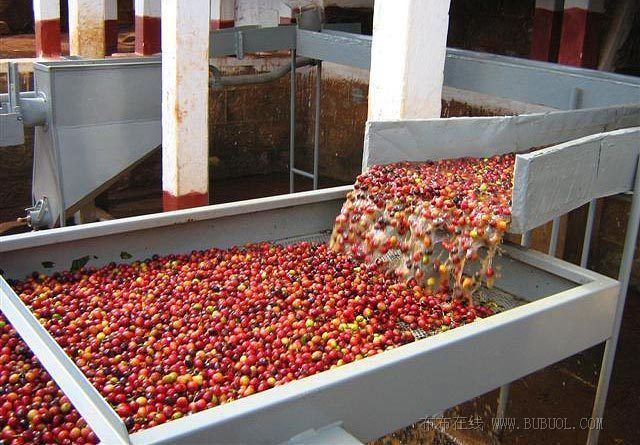
The treatment method of Coffee Fruit-- the introduction of Water washing method and the difference between Water washing method and Solar method
When the coffee fruit is harvested from the mountain, the next step is to remove the peel and pulp of the coffee beans. There are two main ways of treatment: washing and solarization. But the ultimate determining factor is whether there is enough water to use. Some special boutique coffees are both insolated and washed. Washing requires the use of special machinery and equipment and adequate water sources.

Flavor characteristics of Sumatra Ketiara Cooperative Coffee Ketiara Cooperative Coffee
Professional coffee knowledge exchange more coffee bean information please follow the coffee workshop (Wechat official account cafe_style) Ketiara Cooperative headquartered in Sumatra Ketiara Cooperative is led by women. Twenty years ago, the chairwoman began to buy cherries and process them into green coffee. After picking the cherries, the farmer sends the cherries to the gatherer for pulping and drying, the ratio of pulping to drying.

How do Kenyan Kangunu Coffee drink Kenyan Coffee rating system Kenyan Coffee beans
Professional Coffee knowledge Exchange more information on coffee beans please follow Coffee Workshop (Wechat official account cafe_style) kanguru AA-Kenya this coffee is produced by many small farmers, who are members of farmers' cooperatives in the south of Kagaari and supply coffee to the Kangunu Coffee Factory in Embu District, Kenya, near the town of Runyenjes. The area is located in the mountains of Mount Kenya.
Coffee bean picking-berry processing-drying process
What we call coffee beans is actually the seeds of a cherry-like fruit. Coffee trees produce berries called coffee berries, which turn bright red to indicate ripeness and are ready for picking. The fruit clustered on the branches. Coffee berries have thick, bitter outer skins (exocarp). However, the fruit inside (mesocarp) is sweet and has a grape texture. And then parenchyma, which is like

The difference of Grade Flavor and taste between Panamanian Red Standard Rose Summer Coffee Bean and Ethiopian Rossia Village Red Standard Coffee
Professional coffee knowledge exchange more coffee bean information please follow the coffee workshop (Wechat official account cafe_style) Rose Summer, not only exist in Panama Emerald Manor, Costa Rican Goddess Manor and so on. Today, let's talk about the Xingui Rose Summer Village Manor, which has been in the limelight for the past year or two.
Coffee bean processing coffee washing method or drying method is better
The refined processing of coffee beans has about 8 processes, such as rough processing, separation, classification, fermentation, drying, shelling, polishing, sorting and so on. There are two ways to prepare coffee beans for the baking process. The method chosen has a significant impact on the final value and quality of coffee. The cheapest processing method is called drying, which is used for lower grade coffee beans and higher quality coffee beans.

Description of St. Helena Coffee Flavor introduction to Grinding scale of Variety treatment method in Manor area
St. Helena Coffee Flavor description Variety treatment method Grinding scale of St. Helena Coffee introduced Napoleon, as a coffee fanatic, came ashore and lived in Longwude Manor, where he began to write memoirs, dictated by him, and was recorded and sorted out by the adjutant who accompanied him. During his exile from 1815 to 1821, the French dwarf spoke highly of St. Helena's coffee.
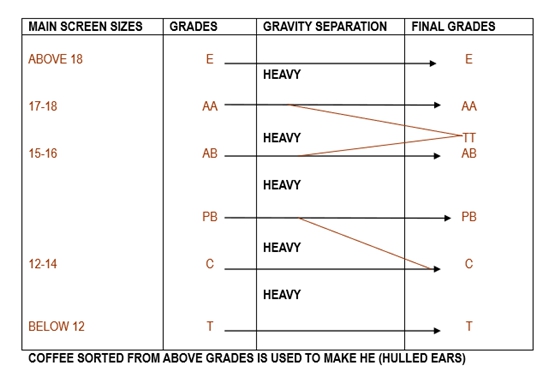
World boutique Coffee beans: Kenya Coffee Grade Kenya AA
Kenyan coffee has many followers in the boutique coffee industry, and Kenyan AA has an extraordinary popularity. Usually, Kenyan coffee is classified as follows: 1) Common categories: coffee fruits picked by hand, picked by hand, picked out immature fruit (unripe), overripe fruit (overripe) and other defects, peeled, fermented for about 36 hours, and dried in the sun on a metal grid.
Coffee berry picking-berry treatment-drying
The coffee beans we are talking about are actually the seeds of a fruit similar to cherries.

Malawi Sable Farm introduces the characteristics of Malawian pea berries coffee
Attention Coffee Workshop (Wechat official account cafe_style) Coffee has been grown in Malawi, a small country in the southeast of Africa, for nearly 100 years, but due to years of lack of cooperative organizations, this crude production has not yet been considered a country producing high quality coffee. Until recently. In 2007, Mzuzu Coffee Growers Cooperative Union
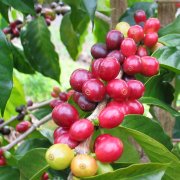
Coffee Grading in Kenya
The growing environment of fine coffee beans also has higher requirements. It generally grows at an altitude of 1500 meters or even 2000 meters above sea level, with suitable precipitation, sunshine, temperature and soil conditions. Some world-famous coffee beans also have special geographical conditions, such as the mountain clouds in the Blue Mountains, the free shade provided by afternoon clouds in Kona, and the volcanic ash soil in Antigua.
Coffee grading in Kenya
The growth environment of boutique coffee beans also has higher requirements. Generally grow at an altitude of 1500 meters or even more than 2000 meters above sea level, with appropriate precipitation, sunshine, temperature and soil conditions. Some world-famous coffee beans also have a special geographical environment, such as the alpine clouds in the Blue Mountains, the free shade provided by the afternoon clouds in Kona, and the volcanic ash soil in Antigua.